

THE PROCESS TO THE THIRD EMPIRE
OPENING STATEMENT IN THE COURTROOM
“No one accused Henry K. of the many evils he had done, if there had been luck, he would have been arrested long ago.”
When he was little, Henry K. loved fairy tales and picture books, but he always despised art. In high school, Russian writers and composers tortured him with music and litterature. His first girlfriend who loved avant-garde painters of the twentieth century left him since he was blind for paintings. Later, Henry K. turned to high politics. He was a key figure in all international affairs, causing conflicts, local and civil wars, and he became very rich from it all.
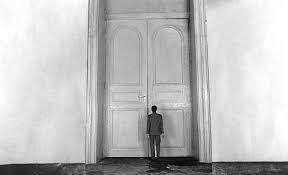
Years passed, but those Russians from his childhood did not leave him alone. Every night he dreamed of a landscape with five houses where The Nutcracker sailed on the Swan lake and in a nearby cottage, Rodion Raskolnikov listened to “Rachmaninoff’s Sonata” performed by the magical Lolita. The nightmares didn’t stop, and the accumulated experience of centuries didn’t offer a solution. One day, he decided to take revenge on his enemies. He took the book “The Third Empire: Russia as it should be” by Mikhail Yuriyev off the shelf, packed it in a large yellow envelope and wrote the address – Vladimir Vladimirovich
23, Ulitsa Ilyinka, 103132, Moscow, Russia.
PROSECUTION AND DEFENSE
In February 2022, Putin announced an attack on Ukraine. Seven months and five thousand deaths later, the war still continues, innocent people are dying, and the West is worried about something else. Life goes on, and stupidity follows like a conveyor belt. Soon, Dostoevsky is banned in Rome, Malevich in Amsterdam, Tchaikovsky in Cardiff and Zagreb… Russian fairy tales have served as scenarios for horror movies in Hollywood, and the Periodic Table of Elements by Dmitry Mendeleev will be replaced with the multiplication table.
When bad times come, normal people are left with nothing else but to crawl into a mouse hole and read books. In wars, life is often lost due to a wrong religion or surname, and because of wars, here we are, banning art. Consenquentlly, Russian literary classics become more and more popular every day. However, if one makes a list of the most significant Russian writers, it will always include Dostoevsky, Tolstoy, Chekhov, Gogol, Pushkin, Lermontov… If their names won’t surprise anyone, their origins certainly will, because of the mentioned giants of the written word, only Tolstoy is a “pure” Russian, while the others are connected to Ukraine by family ties. Before the “historical hematologists” start counting the blood cells of 19th century Russian writers, let’s turn to facts.
Gogol was from central Ukraine, and the grandfather of Fyodor Mikhailovich Dostoevsky lived in the Ukrainian city of Vinnytsia, while Chekhov was born near Mariupol. A century later, Mikhail Bulgakov lived in Kiev, Anna Akhmatova and Igor Petrov in Odessa, and if we add that Pushkin had African and Lermontov Scottish blood, the story of ethnically pure literature definitely falls apart. Intelligence, esthetics, and talent are humanistic and cosmopolitan values, while nationalism is cheap entertainment for fools.
Nikolai Gogol (Ukrainian name Mykola Hohol) was born in the Poltava region of central Ukraine. They spoke Ukrainian in the house, and when he went to school, he began to learn Russian, which was also the official language of the empire. His father taught him literature, and his mother religion. When he turned twenty, Gogol moved to St. Petersburg. During his studies, he wrote school assignments and literary projects in Russian, while using Ukrainian for himself. At that time, there was a “circle” of Ukrainian writers in Petrograd, led by Taras Shevchenko, in whose work Gogol actively participated and was a respected member. In his early stories, he nostalgically described memories of youth and homeland, while in his mature literary phase, he became much sharper. In his seminal work, the novel “Dead Souls,” he used a sharp satirical style to describe the reform and emancipation of Russian serfdom, when landlords were allowed to own peasants. The word “soul” was used as a unit of measure for peasants! Thus, the Russian peasant tycoons of that time owned hundreds of “Slavic souls.” Gogol traveled throughout Western Europe, getting to know the culture of other countries. Towards the end of his life, he became completely devoted to religion and advocated for the reconciliation of the Eastern and Western churches, which he believed were equal before God. He called Russia the empire of “dead souls.” If he were alive today, he would probably align himself with Christian intellectuals who advocate for peace but not at any cost.
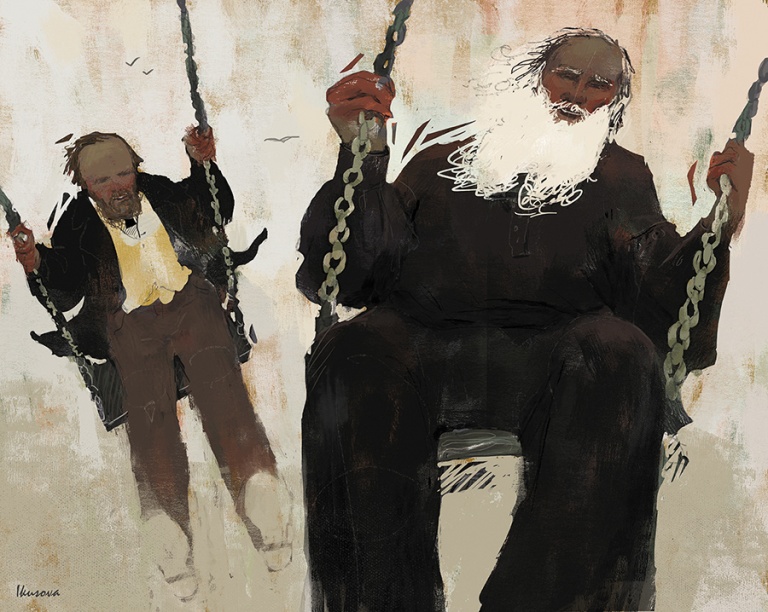
Leo Tolstoy comes from a noble Russian family. He was raised traditionally according to conservative canons of national pride. Following in the footsteps of his father, Count Nikolai Ilyich, young Tolstoy at the age of twenty-six goes to the Crimean War, which in many ways resembled the one being fought in the same area today. Tolstoy arrived in Sevastopol with the romantic idea of military honor and obligation to fight for his homeland. Patriotic dreams quickly vanished in the smoke of gunpowder. In his autobiographical work “Sevastopol Sketches,” Leo Tolstoy portrayed a bloody battlefield with drunken Cossacks, beardless young men lost on the front line, the sound of bayonets, and the cries of nameless victims. Uncharacteristic of a Russian soldier at the time, Tolstoy concluded that propaganda from the conceited rulers was designed to sacrifice the uneducated people who would die for “Mother Russia”. Newly awakened pacifism is even more explicitly expressed by Tolstoy in the book “Resurrection,” stating that war is an evil that cannot be justified by any master, king, or priest, and unfortunately, they have become the ones who encourage, initiate, and lead it. Due to these views, Leo Tolstoy was excommunicated from the Russian Orthodox Church. As a requalified peacemaker, he would probably be at the head of some non-governmental organization today.
Anton Pavlovich Chekhov was born in Taganrog, a small town near Mariupol. After finishing high school, he moved with his family to Moscow, where he enrolled in medical school and later published his first collection of short stories. During his studies, Chekhov would spend every summer with relatives in Ukraine. He stayed in the village of Luka near the city of Sumy, where he came up with the ideas for the first plays that would later bring him literary fame. He wrote about the egoism and arrogance of high Russian society. In Anton Pavlovich’s works, we discover a unique atmosphere and a brilliant dramatic approach. Chekhov did not analyze the causes of social behavior, but rather satirically depicted the lives of his characters, whose fates we experience through tears and smiles. If he were alive, he would surely have helped as a doctor on the Ukrainian front.
Fyodor Mikhailovich Dostoevsky came from a poor family and he viewed society and the world around him critically. He found beauty only in faith and art. Dostoevsky inherited his love for literature from his grandfather Andrei, a Russian priest who lived in Ukraine. As a child, Fyodor would visit his grandfather and bring back many books from Vinnytsia, which his grandfather would select specifically for him. Today, the graves of the Dostoevsky family can be found in the Ukrainian town of Kalynivka, and their descendants live in Kyiv, Odessa, and Makijivka. In the town of Vyatichi, there is a museum dedicated to Fyodor Mikhailovich that showcases his connections to Ukrainian culture, societal conditions, and population.
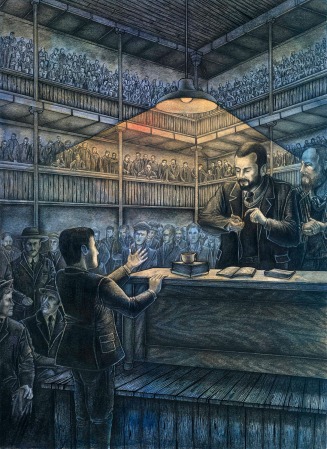
During a debate where he expressed positive views towards books and writers who represented socialist ideas, Dostoevsky was sentenced to death. After being arrested and subjected to a sadistic farce by the imperial police, the author and his companions were led to a staged execution. While awaiting their execution in front of the firing squad, they were granted clemency from the emperor. Their supposed punishment was changed to a lengthy prison sentence. In reality, the authorities never intended to execute them; it was merely a form of sadistic abuse towards powerless individuals. While in prison, Dostoevsky underwent a significant ideological transformation. Previously, he had leaned towards Christian mysticism and liberal social ideas, but after his time in Siberian exile, he began to have a positive view towards monarchy, Russian Orthodoxy, and nationalism. In the winter of 1881, Dostoevsky was given a magnificent funeral attended by over one hundred thousand people, mostly students. The funeral spontaneously turned into demonstrations against the Tsarist regime. If he were alive today, he would undoubtedly criticize those in power, but he would also vigorously oppose Western politics, which he never tolerated.
FINAL WORDS
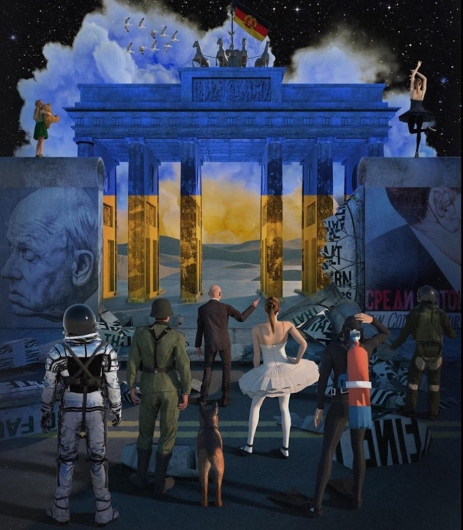
No one can interpret Putin’s thoughts, but we can read the book that inspired the Russian president to start a war against the whole world. Mikhail Yuriyev’s utopian novel “Third Empire: Russia as It Should Be” was published in 2006 and represents a textbook whose lessons are still diligently studied in the Kremlin today. The book explains the necessity of re-establishing the old world order, when Russia surpassed Europe and America in total power. The first empire was established during the reign of Peter the Great, the second under Stalin, and now, it is time for the third and final one.
The novel describes in detail the years of Russian renaissance that began under the rule of Vladimir II and continued under Gavriil the Great until the final creation of the Third Empire. Both rulers successfully implemented the “new Stalinization” project. The first step in this direction was the annexation of Crimea and the invasion of Donetsk and Luhansk. In a referendum, 93% of the population voted for the creation of an independent Black Sea Republic of Donetsk and the annexation of the territory of eastern Ukraine. Soon after, the independence of Belarus and Ukraine was abolished.
Although he did not predict the world’s economic sanctions towards Russia, Yuri in the book describes in detail the gas and nuclear weapons blackmail. At one point, the protagonist of the book, Vladimir II, says in an interview with French television, “If you don’t love us, start a war and conquer us, or even better, stop buying gas, energy, and food from us and die of hunger!” With a decisive stance to confront the whole world, Vladimir II provokes a reaction from the West when the Third World War begins. After years of destruction and countless human casualties, Russia emerges as the winner, and at its helm is Gavrilo the Great, the successor of the great Vladimir II who deservedly goes down in history.
INTERMISSION
While waiting for the verdict, the defense attorney was flipping through the morning edition of the “Fraud” tabloid. In the middle of the third page, it read: “In May 2023, Henry Kissinger will celebrate his 100th birthday. There is no disaster, war, or moral filth that happened in the world in the past century that was not somehow connected to him. When asked by a reporter what’s next, Henry K. seriously replied, “Another hundred years like this, and then we’ll see!”
VERDICT
“On the evening of his birthday, around nine o’clock when silence prevailed on the streets, two gentlemen in tailcoats, pale and corpulent, with top hats seemingly bolted to their heads, came to K.’s apartment. With eyes that were dying, K. saw the gentlemen, cheek to cheek, watching the execution of the verdict. ‘Like a dog,’ he said, and it seemed that shame would outlive him.”
NOTE: Slightly modified quotes from Franz Kafka’s novel “The Trial” were used in the text.

 STORY TELLER
Leave a comment