

Although several decades have passed, the people of my hometown still talk about that event. Raya and Tosha, longtime residents, peers, and best friends, lived in my neighborhood. They went to school together, their military days passed similarly, they experienced their first loves together, and they both got married in the same year. As fate would have it, they even had sons within a few months of each other. The years went by, and the friends never separated. When their beer bellies started to grow and their hair thinned out, they decided to marry off their sons.
In the early 1980s, life was quite good. Raya hosted the first wedding, following old Serbian customs, under a tent in the backyard of his house. The groom first shot an apple off a tree with a rifle, and the bride sat on her mother-in-law’s lap. All three hundred guests found a place at the wedding dinner table, and the festive meal could begin.
Everything went according to plan: appetizers, soup, cabbage, and two types of roast meat. The food was washed down with gallons of wine, beer, and rakiya, while the young folks consumed artificial yellow and black juice. Somewhere around dessert, the roast meat ran out, and the guests asked for more. “They’re eating like it’s their last meal!” complained the groom’s father. In an attempt to salvage the situation, the wedding host Tosha fired up the grill and cooked pork chops from the freezer. The guests were surprised by the change in the meat selection but didn’t complain anymore. The newlyweds retreated to their chambers, and the parents bid farewell to the satisfied guests.
From that day on, however, Tosha never missed an opportunity to taunt his friend about how he had embarrassed himself by not having enough roast meat: “When I throw a wedding, it will be top-notch,” boasted Raya’s buddy, “as our elders say – until you’re stuffed, it’s not enough!”
Six months later, the time came for Tosha to fulfill his promise. A tent was set up in the yard for 350 people. Wine in fancy bottles, beer in cans, original juices, and an abundance of roast meat. “I have enough food and drinks to drown everyone!” bragged the newly minted father-in-law. Raya had enough time to prepare his revenge and return the favor to his friend. As a gift to the newlyweds, Raya bought three live piglets.
The singer informed the guests about the presents brought by the most important participants in the celebration: “The best man bought a washing machine. Wow, well done, best man! The uncle, three hundred euros – he didn’t strain himself too much…” Raya waited for the atmosphere to heat up, and then he released the piglets to stroll between the tables. Women screamed, musicians dropped their instruments, and the brother-in-law climbed onto a bench out of fear. Chaos erupted under the tent. The guests panicked, the piglets ran around, and Raya enjoyed his sweet revenge with a smile on his face.
At first, Tosha was angry, but he soon realized that his friend was just giving him a taste of his own medicine. After it all, they remained the best of friends, gossiping about in-laws and friends, and bragging about their grandchildren while their humorous adventures lived on in the memories of the town’s residents.
Throughout history, traditional weddings in Serbia have been characterized by various customs that varied depending on the time period and region in which they took place. In the Middle Ages, for example, weddings in Serbia were organized as modest family events without much fanfare. After the wedding ceremony, the wedding procession would walk through the village, and then the immediate family members would continue the celebration at the bride’s house. The wedding feast would conclude the wedding ceremony. In the 19th century, the wedding and everything that followed took on a new ritual dimension. The exchange of vows would take place in the church, after which the priest would lead the wedding party to the groom’s house, where food, drinks, songs, and dances would be celebrated well into the night. In the 20th century, Serbian weddings became even more grandiose, with the organization of the wedding reception becoming more important than the ceremony itself. Marriages were solemnized both at the municipality and in the church, and the celebration would continue either in a restaurant or under a tent, where guests would enjoy the wedding lunch and dinner while reveling and having a good time. The party often lasted until the early hours of the morning. Traditional weddings based on Serbian customs are part of a rich cultural heritage and mark an important moment in the lives of the newlyweds and their families.
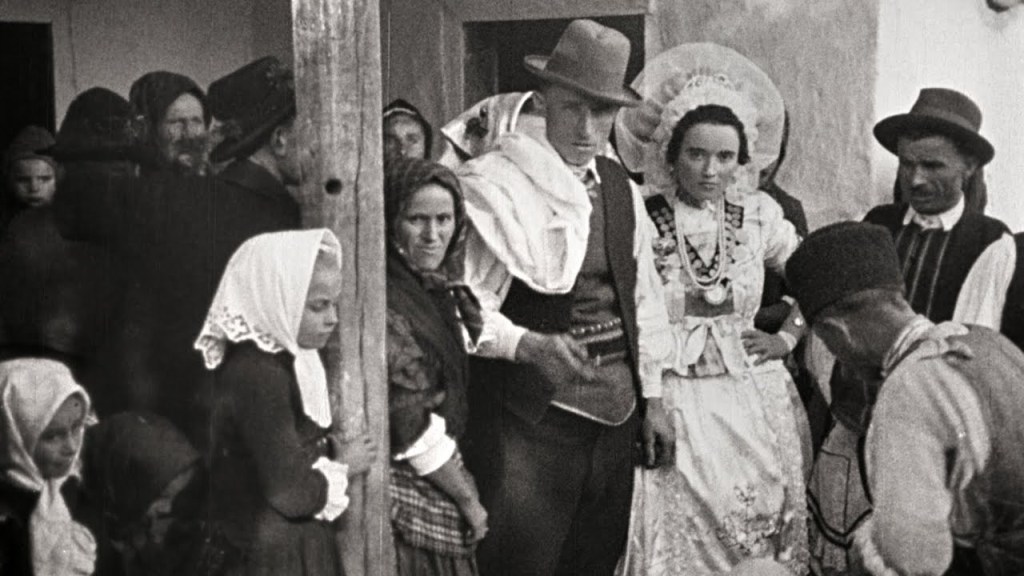
Wedding customs vary across Europe, with each country having its own traditional elements in accordance with local culture and history. In Germany, before the wedding, friends and family organize a party for the couple. During this event, ceramic objects are broken to ward off evil spirits and ensure good luck for the newlyweds. The bride and groom jump over a wooden log together as a symbol of overcoming life’s challenges together. Traditional food such as pork knuckle, potatoes, and beer is served at the wedding. In Italy, on the evening before the wedding, the groom comes under the bride’s window to serenade her. Friends and family members attend this romantic moment. Guests receive small bags with sugared almonds as symbols of happiness, health, wealth, fertility, and longevity. The newlyweds walk to the church accompanied by guests and musicians. The groom presents the bride with 13 gold coins, representing his readiness to provide happiness and prosperity to the family. After the wedding, guests throw rice at the couple to wish them luck and success. The wedding table includes vegetables, pasta, pizza, and various cheeses. American weddings are often held in specialized venues. After the ceremony, which can be officiated by a close friend or relative who has completed an online course for this occasion, a cocktail reception begins. It is a great opportunity for guests to mingle over cocktails and appetizers. This is followed by the wedding dinner during which toasts are exchanged. Unlike Balkan weddings, the formal meal in the United States usually consists of a main course and dessert, with strict portion control, so there are no seconds. The newlyweds then open the dance floor to the tune that brought them together. The DJ is responsible for setting the mood and fulfilling the musical requests of the couple and their guests. The wedding celebration typically ends before midnight.
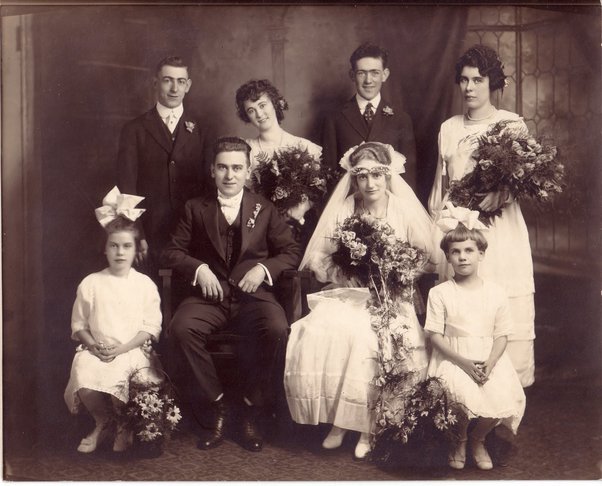
In addition to attending weddings in my hometown, I have also attended many American weddings, as well as similar celebrations in Italy and Greece. These experiences have been diverse and certainly helpful in preparing this article. However, recently, an invitation arrived for a destination wedding on the French Riviera. From that day on, the perception of a wedding celebration has changed in the mind of the author of these lines. It used to be a ceremony attended out of obligation to avoid offending the hosts, but a destination wedding in France represents the most delightful celebration that can be enjoyed with all senses.
A small wedding expedition set off from two American states: the bride’s relatives and friends from Arizona and the groom’s guests from Illinois. The meeting point was Paris. After several days of tourist adventures and getting to know each other better, the journey continued to the south of France, to the beautiful Cassis near Marseille, which was designated as the wedding destination.
If the beauty of a journey is judged by the little things, there is no reason to worry. Firstly, my wife was ready on time, and the grumpy neighbor who rarely says hello warmly greeted us and wished us a safe trip. Finally, the kind taxi driver dropped us off at Terminal 4 of Sky Harbor Airport in Phoenix. The whole family gathered, three generations, six decades of love, happiness, and life’s challenges. Thanks to the little ones comfortably seated in children’s strollers, we boarded the plane by cutting the line. Two and a half hours later, we landed in Dallas. We ran around with the kids at the airport to burn off energy before the intercontinental flight. Ten hours in the claustrophobic aircraft space is a challenge even for us experienced travelers. In recent years, the comfort in planes has become a mythical notion. Once upon a time, business class meant true luxury: huge seats, abundant food and drinks, and even the possibility of making phone calls to mere mortals on the ground. Since air travel has become part of our everyday life, the “comfort” of the airplane has adapted to the needs of airlines. Airplane seats are getting smaller every day. Now, in business class, the seats are of normal size, while the rest of the plane applies the Barbie doll size seat. The common folk are forced to endure, and it often happens that passengers with a more generous posterior have to pay for two tickets. For those who manage to fit their behinds into the miniature airplane seat, the struggle begins when their neighbors get tired. Then, a seemingly refined lady in front of you reclines her seat and ends up in your lap. Meanwhile, the fat man with a mustache on the left casually spreads his butcher-like arms, so the comfort of flying can realistically be compared to transporting sheep to Brisbane.
When a person mentally prepares for the aviation torture in advance, ten hours of airplane torment pass relatively quickly. We landed on the runway of Charles de Gaulle Airport in Paris, and there was no trace of applause or cheers. In Serbian planes, there is an unwritten rule that applause is given at the end of the flight to acknowledge the pilot’s skill. Our fellow passengers, however, were in a hurry to leave the “comfort” of the Boeing 787 as quickly as possible. Airport security checks haven’t changed much since September 11, 2001. There is no easing, but fortunately, there haven’t been any stricter measures either. Bag and personal item checks, frisking, patting down, and lecturing in the style of “If you had listened to me, I wouldn’t have to repeat myself!”
At the entrance to France, there were two lines: one for European Union passport holders and another for the rest of us, including U.S. citizens. An hour in line, sighs, complaints, and persistent attempts to break through to the front rows. Passport control was mostly conducted by women in different uniforms with the emblem of one of the EU countries. Naturally, I got a Croatian female officer.
Paris, the city of art, light, and political courage. The last time I visited was in November 1989 when the Berlin Wall was being demolished nearby. This time, nothing was falling, but President Macron’s chair was shaking. The media hysteria frightened my American companions, who embarked on their journey to France with hesitation. The objectivity of the media could be seen on the ground. Watching CNN or FOX NEWS, one would get the impression that a civil war was raging in France. In Paris, however, the situation was regular, life was normal, and the problems were the usual ones that plague the inhabitants of all big cities. Only in the evenings, on the Champs-Élysées, at the announced time and along the strictly designated route, protesters carried banners and chanted slogans against the new retirement law. Garbage collectors were doing their job just like taxi drivers, pilots, and others. Soldiers armed with automatic rifles walked around important strategic locations such as the main train stations, airports, and famous tourist sites, more as a form of preventive strictness.

Right from the airport, the Arizona wedding expedition arrived at an apartment on Place de la République, which we had reserved back in December of last year. We immediately surrounded the building with numerous suitcases when an older woman with a witch-like appearance suddenly appeared from somewhere. With a stern, shouting voice, she declared that only one suitcase could be brought into the elevator so that it wouldn’t break down. The group initially thought the lady was joking, but she quickly dispelled their doubts by showing them her middle finger as she left. The bewildered Americans couldn’t believe that this was what French hospitality looked like. Fortunately, during their stay, they realized that this rogue lady was an exception and that the French were much more courteous. The apartment looked nice. However, an extra closet wouldn’t hurt, nor would some cutlery. There were no spoons or forks in the kitchen, which was quite unusual because I have seen countless times that the French don’t eat with their fingers.
The little ones adapted to the time difference, and the rest of the group went to the restaurant Le Christine. Dinner in installments – a gastronomic series of five episodes, the refined world would call it – a five-course meal. As an atypical Serbian man, I have always enjoyed trying new dishes. I respect sarma, hats off to ayvar, I gladly eat Karađorđe’s schnitzel, but I am open to world specialties to which their creators have dedicated a lot of attention, time, and skill. Each of the five mini portions of exotic dishes was a masterpiece of French cuisine: cauliflower mousse, artichokes in sesame sauce, cod in green sauce, duck fillet with red cabbage gel, and finally, mango combined with tropical fruits and ricotta cheese. I can already see my friends from the old neighborhood frowning and rolling their eyes. You’re mistaken, my dear friends, you haven’t eagerly anticipated pleasure until you’ve tried it.
Unlike Arizona, in the capital of France, walking is the most popular means of transportation. After a full day of walking, the heart-shaped app on my phone declares – fifteen thousand steps. Considering the physical activity, it’s not surprising that despite the fantastic food, most Parisians have a slender figure. When a large group of people from the American West arrives in a European metropolis, comparisons are inevitable. Some claim they would move without hesitation, while others wisely remain silent, aware that stating that America is better would not be understood. For a young man approaching his sixties, visiting Paris is interesting and exciting as long as there is an alternative. However, my favorite place is still home, comfortable and spacious, and driving on highways with minimal traffic congestion, where walking is a recreation and not a necessity. Tourism – yes, relocation – definitely not!
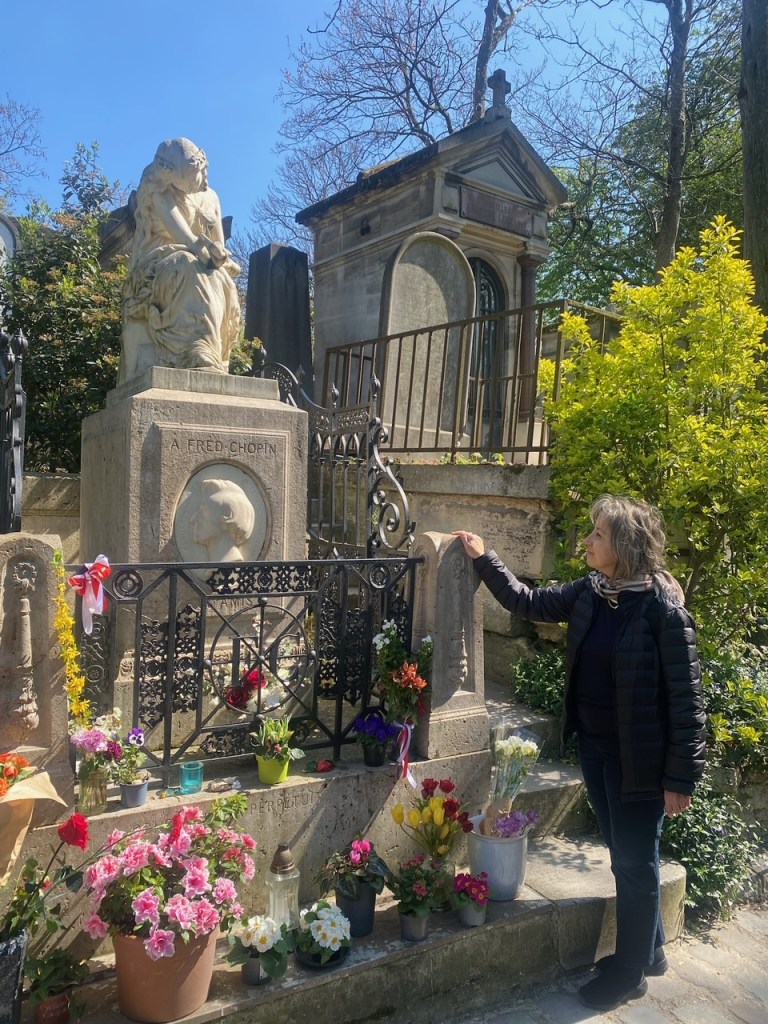
The next day, the oldest members of the expedition headed to the twentieth arrondissement to visit the eternal resting place of many famous personalities. When you reach a certain age, it’s logical for Père Lachaise to be at the top of the tourist destinations in Paris. The cemetery covers an area of about 110 acres. It was opened in 1804 and got its name from Father François d’Aix de Lachaise, known as Père Lachaise, who was the confessor of French King Louis XIV. Over 70,000 people are buried here, including Chopin, Oscar Wilde, Jim Morrison, Edith Piaf, Marcel Proust, Georges Bizet, Balzac, Molière, and many others.
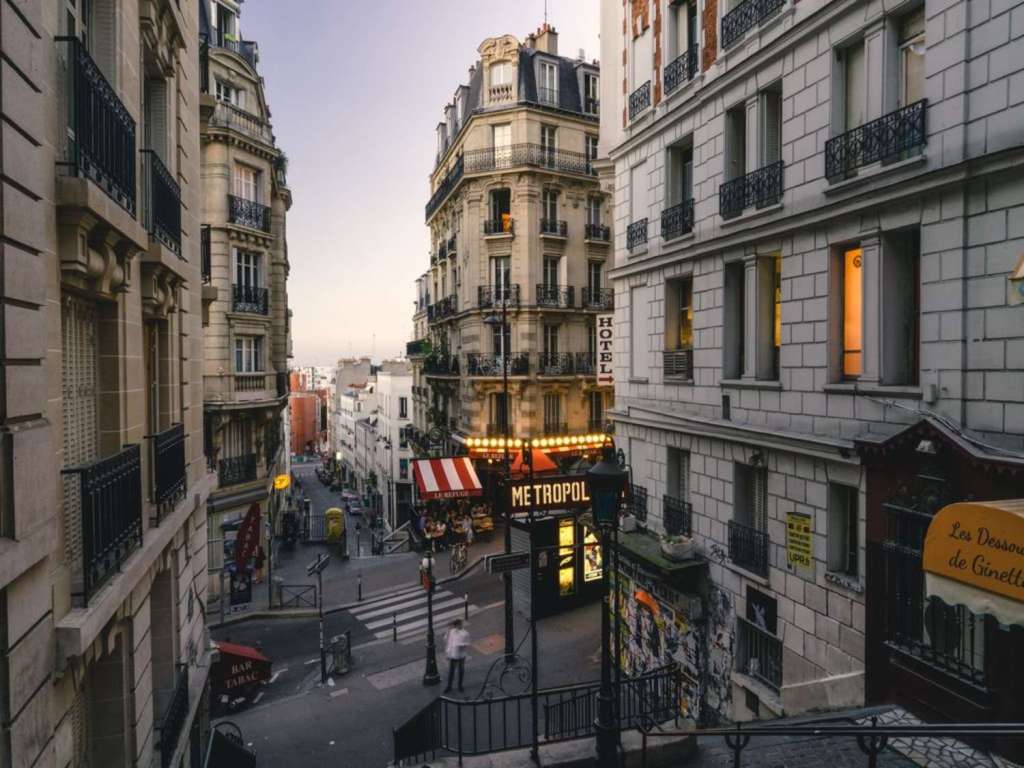
The next destination was Montmartre. Since it was a holiday weekend, the Saturday before Easter, the crowd was indescribable. Montmartre carries a special magic within it, and even the chaos of thousands of tourists couldn’t spoil the wonderful impression. This artistic district in the northern part of Paris is located on the Montmartre hill, from which the entire city can be seen. The history of this place dates back to Roman times, and in the Middle Ages, it was known for its vineyards and mills where Parisians bought flour. Only the Moulin de la Galette has survived to this day, which holds special cultural and historical significance.
During the 19th century, Montmartre became a haven for artists and bohemians who gathered in bistros, cabarets, and their artistic circles. This neighborhood was cheaper to live in and offered artists more creative freedom. The Moulin Rouge, which opened in 1889, is also located in this part of the city. “The Red Mill” has been and remains one of the most famous attractions of the French capital. Painters have always been the hallmark of Montmartre, and famous artists such as Picasso, Van Gogh, Renoir, and Claude Monet also enjoyed visiting the artistic oasis of the 18th arrondissement, while its most famous resident was Toulouse-Lautrec.
A favorite tourist destination in this part of Paris is undoubtedly the Sacré-Cœur Basilica, built at the end of the 19th century on the top of Montmartre hill. The church is recognizable for its original Romanesque-Byzantine architecture and is dedicated to the Sacred Heart of Jesus. Besides its religious significance, this basilica is also known for glamorous weddings, just like the Musée de Montmartre, an art museum with an impressive garden from which newlyweds can see the whole of Paris as if in the palm of their hand. In the age of consumer capitalism, Montmartre is also known for its art shops, souvenirs, and painters who can create a portrait for you in about ten minutes. The “model” is not obliged to buy the final product, and the price is subject to negotiation.
The first day in Paris was very productive thanks to the “world wonder” called the Metro. I rarely used public transportation in my life. In Kragujevac, we could reach everywhere on foot, and in Arizona, due to scattered urban solutions, we rarely got out of the car. Every stay in Paris reminds me of the benefits of underground trains. The speed and ease with which Parisians navigate their city evoke envy in any well-intentioned tourist. The atmosphere in the metro brought me back to my youth when I studied French language and literature at Alliance Française, and at that time, I loved to stop by a bistro. In Paris, there is a large number of bohemian cafes and restaurants that are unique in their authenticity and French charm.
The most famous writers, painters, poets, and philosophers spent their time in places like these, and the atmosphere in French bistros still retains the spirit of old times. Among the popular cafes, I can highlight a few that I visited once again and would recommend to my American friends.
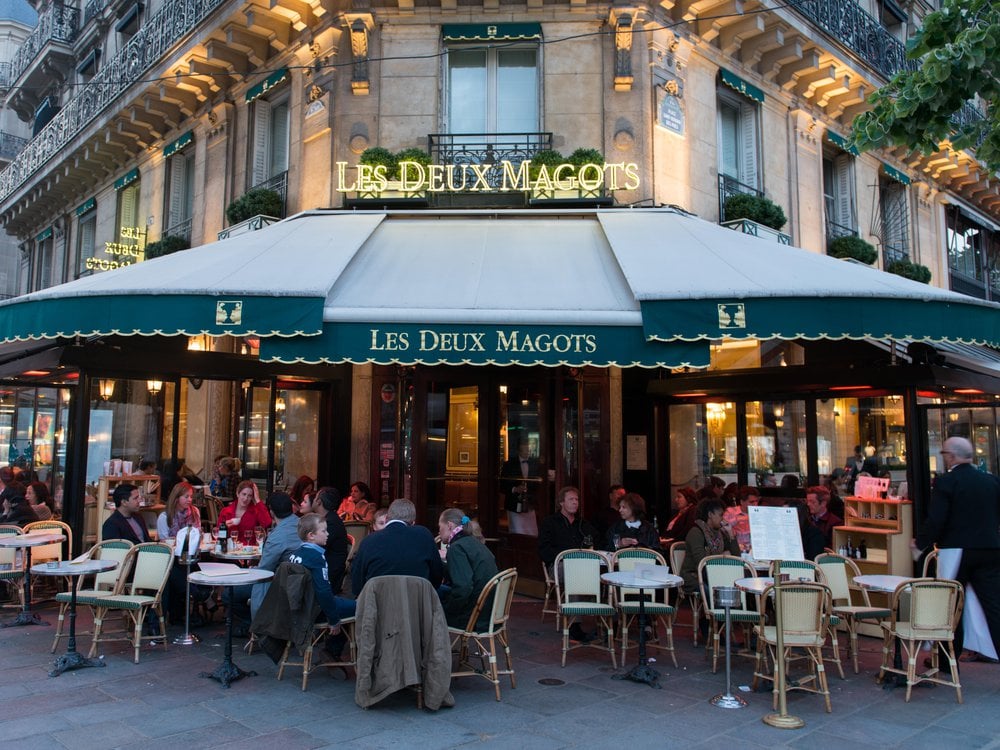
Café de Flore – a legendary café in Saint-Germain-des-Prés, which inspired many French intellectuals and artists. The sign on the wall says that Simone de Beauvoir, Picasso, and Trotsky used to frequent this place. Nearby is the restaurant Les Deux Magots, where Hemingway, Joyce, and Sartre enjoyed their drinks, and the oldest restaurant in Paris, Le Procope, founded in 1686, located in the Latin Quarter. Its most famous guests were Voltaire, Chopin, Napoleon, Hugo, Balzac, Rousseau, and even your humble reporter was a frequent visitor.
The next day was planned for a visit to the famous residence of French kings. We quickly realized that spending the whole day in Versailles with a three-year-old boy and a one-year-old girl was not the best idea. Taxis don’t accept small children as they don’t have specific seats for them, so the journey of about fifty kilometers involved double strollers, several metro stations, suburban trains, a lot of patience, and, above all, persistence and love. Apart from the traffic troubles, we also didn’t plan the visit time wisely. Versailles on Easter looks like an anthill of crazy tourists for whom nothing is sacred except cameras and selfies.
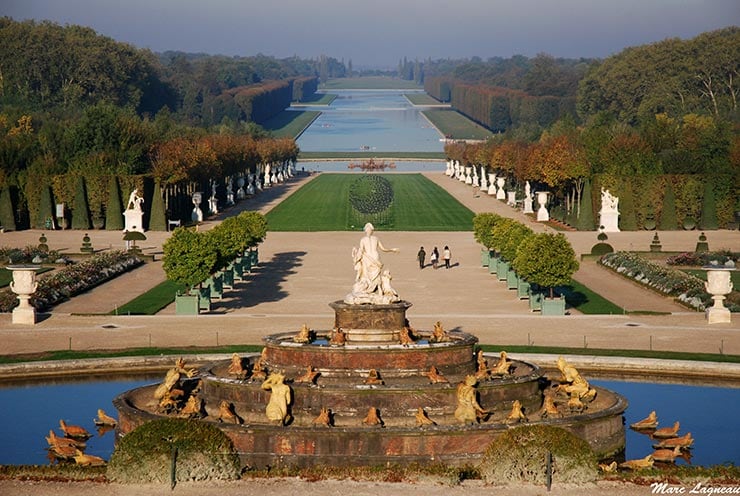
Versailles was built in the 17th century during the reign of French King Louis XIV and gradually became a symbol of the power and grandeur of the French monarchy. The palace has 2,300 rooms and was the home of all the kings until the French Revolution. When Louis XIV first visited Versailles, he slept in a small room that is still called the Royal Chamber. One of the most visited parts of Versailles is the Hall of Mirrors with 357 mirrors, which was used for balls. Versailles is surrounded by monumental gardens with sculptures and fountains, the largest of which reaches a height of 50 meters. Legend has it that Louis XIV once fell into a fountain because he got carried away in conversation with a court gardener. During the French Revolution, Versailles was transformed into a museum, and certain parts of the palace were damaged and looted. In 1919, the Treaty of Versailles was signed here, officially ending World War I.
Someone might think that for a normal person, this full-day adventure is quite enough tourist recreation, but…! The lady who has put up with me for 37 years convinced me in just two words to visit the Eiffel Tower. Said and done. That’s how we “youngsters” are, and where there are young people, there is also tourist enthusiasm. The number of steps that day exceeded 20,000.
The last day of our stay in Paris was reserved for an artistic gathering with my friend Mike, who was staying not far from our apartment. The Hotel Astoral is located on Saint-Denis Street, known for its large number of prostitutes. Knowing Mike, I wonder if the choice of the hotel location was accidental? The Hotel Astoral is decorated with motifs from old French films and photographs of the actors who have stayed there. The rooms overlook the neighboring building, on the facade of which are painted Belmondo, Delon, Morricone, and others. We go together to Café La Cave, where a literary evening is taking place featuring my friend as a performer. In the restaurant’s cellar, dozens of poets from around the world recite their poetry in English. The program host is Nina from Chicago, an eccentric lady of Serbian origin who speaks our language fluently. My favorite American poet, Mike Riddell, is a social butterfly who knows how to work the room. He immediately got acquainted with most of the participants and quickly gained sympathy. Mike’s performance was well-received by the audience. He presented several excellent poems and ended with a story about two friends who came to France from America for a wedding. One of their sons proposed to the other’s daughter in Paris, so on their way to Cassis, where the wedding was to take place, they stopped by Café La Cave for an evening of poetry. The reading of poems ended after midnight. A nighttime walk through Paris in rather misty weather followed. We passed through a part of the city called Barbès–Rochechouart, known for various types of crime. Mike noticed the uneasiness on my face and said, “Don’t worry, they won’t bother us. Can’t you see that we look just like them!”
The next morning, we packed our suitcases and transported them by elevator—one by one—and then arrived at the Gare de Lyon train station as a complete group. “All aboard!” The team was ready. We boarded the high-speed TGV train from Paris to Marseille.
Driving on the TGV railway from Paris to Marseille took a little over three hours. The maximum speed of the train reaches 320 km/h, so the distance of 775 km is hardly noticeable. This is the first high-speed rail line established in France back in 1981. Since then, Parisians have been traveling “down south” to the seaside, while the “southerners” travel in the opposite direction to visit tourist destinations. Although 25 trains operate on this line every day, it is difficult to find an available seat, so reservations are necessary. The view through the window reveals beautiful landscapes of the French countryside reminiscent of Shumadiya.
At the train station in Marseille, it’s bustling like a beehive. We find uniformed drivers waiting for us in front of black vans. Despite the large number of suitcases, we manage to find our seats. Navigating through the afternoon traffic provides an opportunity to unexpectedly explore Marseille, which at first glance strongly resembles Italian ports, which is understandable due to its proximity to the border.
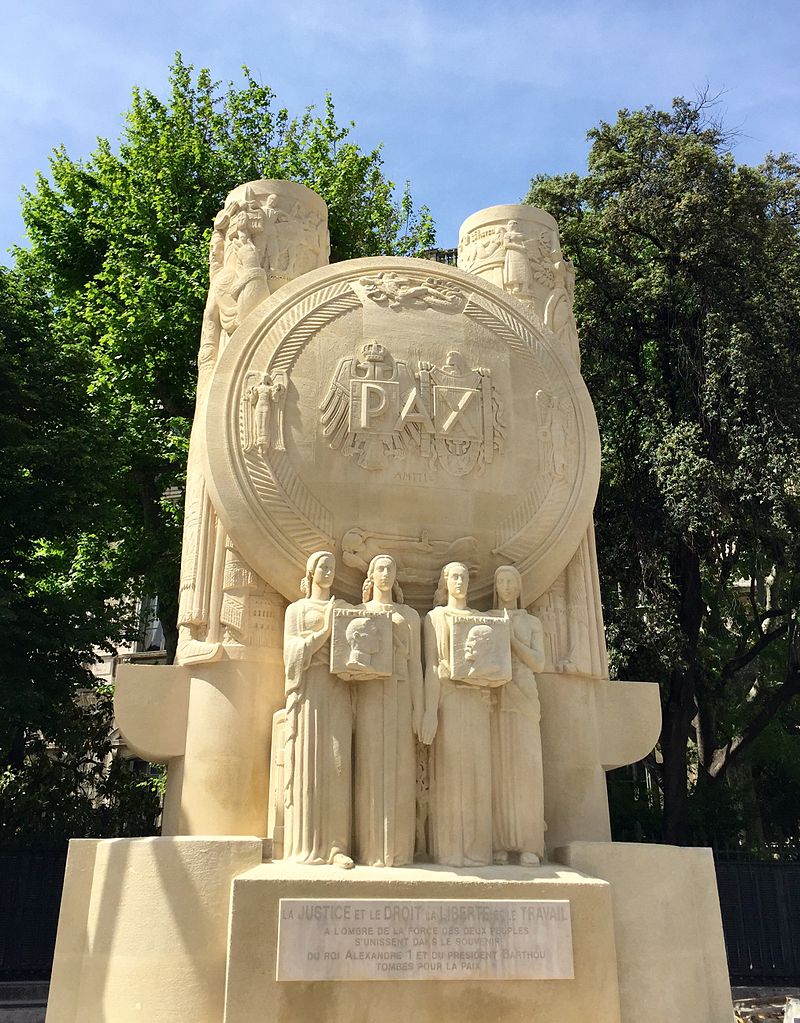
Marseille is one of the oldest cities in Europe, founded by the ancient Greeks around 600 BCE as a trading center called Massalia. Throughout the centuries, it has been devastated by many world powers, from the Romans, Vandals, and Ostrogoths to the Saracens. Marseille was a center of resistance during the French Revolution and later during World War II. Notable tourist attractions include the old port of Vieux-Port, which serves as a base for various maritime vessels, from ancient fishing boats to the most luxurious ships and yachts. In close proximity to the port is the archaic quarter of Le Panier, with its narrow streets, historic buildings, and cultural monuments. It is worth mentioning the famous basilica of Notre-Dame de la Garde, which dominates the city center, the Museum of European and Mediterranean Civilizations (MuCEM), and the monument to Alexander I Karadjordjević. The monarch of the Kingdom of Yugoslavia was assassinated on October 9, 1934, during a state visit to France. The assassination took place while the king was riding through the center of Marseille in an open car. Vlado Chernozemski, a Bulgarian revolutionary and member of the Macedonian organization VMRO, jumped out of the crowd and fired multiple shots at our king and French Foreign Minister Louis Barthou. Both succumbed to their injuries, while the assassin was killed on the spot. In 1938, a monument in honor of Alexander I of Yugoslavia was erected in Marseille. It depicts four women, with portraits of the Serbian king and Minister Barthou on their busts, while the word “Peace” is inscribed across the entire monument. The monument is located in the 6th arrondissement near Castellane Square.
Leaving the center of Marseille, we are greeted by Mediterranean landscapes surrounded by the coastline, vineyards, olive groves, and fragrant lavender fields. Through narrow streets, we enter Cassis, a charming town located just twenty kilometers away from Marseille. It is a picturesque town with a population of eight thousand. Its interesting architecture, authentic cobblestone streets from ancient times, small fishing houses, and sandy beaches make it one of the favorite destinations for French people seeking a peaceful vacation. The locals are mainly engaged in tourism, fishing, and other maritime activities. The town has a rich history dating back to the Roman era when it was known as Carsicis Portus. During the Middle Ages, the town was under the control of the monks of the Saint Victor Abbey in Marseille. In the late 19th century, Cassis became famous for producing high-quality white wines, and in 1936, it received the label of protected geographical indication (Appellation d’Origine Contrôlée, AOC). The most famous wines from this region are Domaine du Bagnol and Clos Sainte Magdeleine.
We arrive at our destination, the Domaine de Canaille castle, located on the slopes of Cap Canaille, one of the highest cliffs in Europe. The first impression is breathtaking. We look at each other in disbelief. None of the members of the wedding expedition have previously had the opportunity to stay in such a luxurious space. For the first time in my life, I feel like a wealthy American tourist. Although only two-thirds of this impression are true, I am filled with happiness and infinite satisfaction that are shared by my companions. The building has fifteen large rooms, a huge dining room, several lounges, and a terrace overlooking the azure sea.
After settling in, it was time for our first shared dinner prepared by chef Jérémie. The atmosphere was pleasant, the company was great, and the food was a sensory explosion.
The next morning, we headed down to the center of Cassis, where we visited the old marina and the 11th-century Château de Cassis, a castle that overlooks the town and offers a magnificent view of the harbor. We rented a boat and set off to explore the surrounding area. This region is also known for its unique limestone coves and has been a national park, Parque nacional de Calanques, since 2012. After lunch, we returned to the base, where the wedding rehearsal was about to begin.
The grand terrace, adorned with vintage lanterns and twinkling lights, exuded warmth that enhanced the romantic atmosphere. The bride and groom, along with the guests in their “civilian attire,” rehearsed every movement down to the smallest detail to ensure that the wedding ceremony would go smoothly the next day. During the rehearsal, a few raindrops caused anxiety and fear among the main participants of the celebration. We tried to encourage them. Some quickly conjured up a fictional weather forecast predicting beautiful and sunny weather on the wedding day.
“Rain brings good luck!” Dylan exclaimed, while the others considered the most appropriate object to throw in his direction.
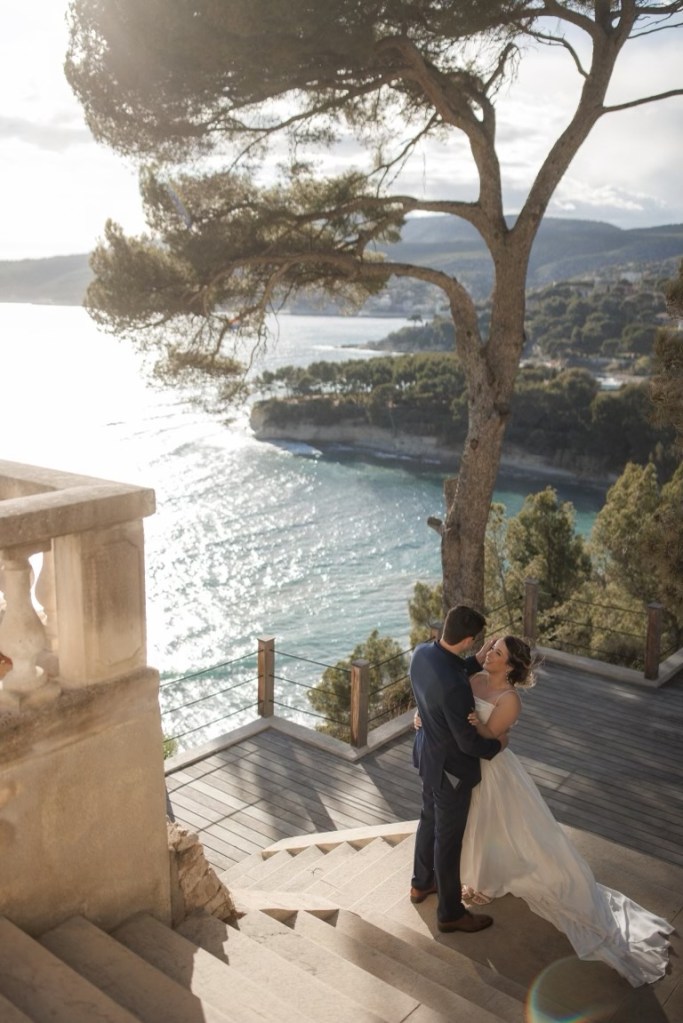
The positive energy and good vibes helped the couple prevent Dylan’s “jinx” from coming true. On the wedding day, the weather was ideal. Sunny, clear, neither too hot nor too cold, just perfect. From early morning, everyone was busy with their tasks. The men made sure that the alcohol supply for the day was abundant, while the ladies focused on relaxation and spiritual peace, practicing yoga and meditation. The final preparations before the wedding ceremony were underway. Everyone was in their places: the hairdresser, makeup artist, cocktail bartender, and the photographer was expected to arrive. It is customary for the parents to see the bride first when she is ready for the solemn occasion. As they receive a symbolic gift from their daughter in gratitude for everything they have done as parents, mom and dad clumsily hide their tears.
On the edge of the monumental cliff, another terrace of the Domaine de Canaille castle stretches out, where the wedding ceremony will take place. The chairs are carefully arranged, the bridesmaids and guests are in their places, while the groom sweats with excitement. To the sounds of Mendelssohn’s march, the mother and father walk their daughter onto the wedding stage. The bride’s father sends a stern look to the future son-in-law, saying, “Don’t joke around because we come from Serbia!” After a brief pause for dramatic effect, the parents hand over the bride to the groom. The bride’s best friend, who has passed the test to become an officiant for this occasion, reads a romantic wedding essay and declares the marriage sealed. Kisses, applause, dramatic music, and a photographer capturing every moment with his camera.
For the next hour, the most popular figure is the bartender who flawlessly mixes ten different types of cocktails. He prepares them with fantastic speed and without anyone’s assistance. The aperitifs quickly create a lively and relaxed atmosphere.
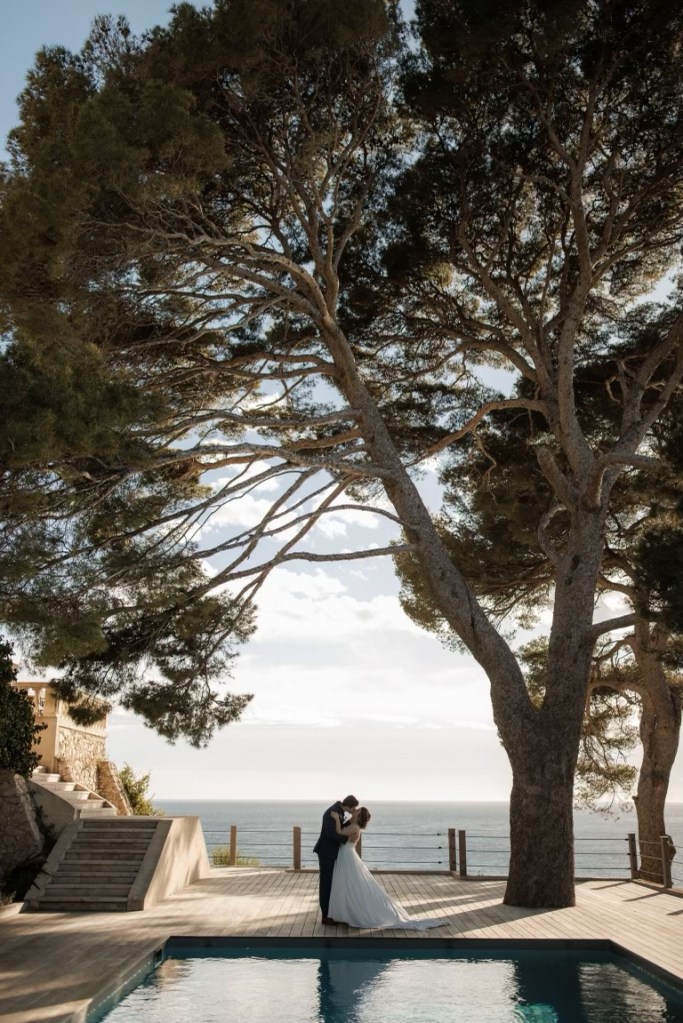
A formal dinner takes place on the central terrace of our residence. Candle flames flicker in the wind as diligent waiters Pierre and Sophie bring out delicacies. The wedding menu includes appetizers such as macarons with Brie cheese, mushroom crème brûlée, and stuffed burrata cheese in arugula sauce. The main course consists of beef cooked for 10 hours on a slow fire with potatoes and gnocchi, following an old recipe from the region. Of course, there is also the wedding cake, a gift from the castle’s owner.
The newlyweds open the dance floor to the tune of “La Vie en Rose.” Toasts, speeches, and heartfelt wishes follow, and then the party continues until midnight.
During those days, our castle was the setting for a story that I had known beforehand and even experienced: once upon a time, there was a father who had three daughters. He lived in Serbia, where it is a tradition for the groom’s family to pay for the wedding. He decided to move to America, where the custom is completely reversed, and the bride’s father is expected to foot the bill. Your reporter concluded his parental mission with the wedding in Cassis. All three daughters married, weddings celebrated with joy, dances performed, and speeches delivered. Now, I am left to marry off my grandchildren, and let others worry about the financing.
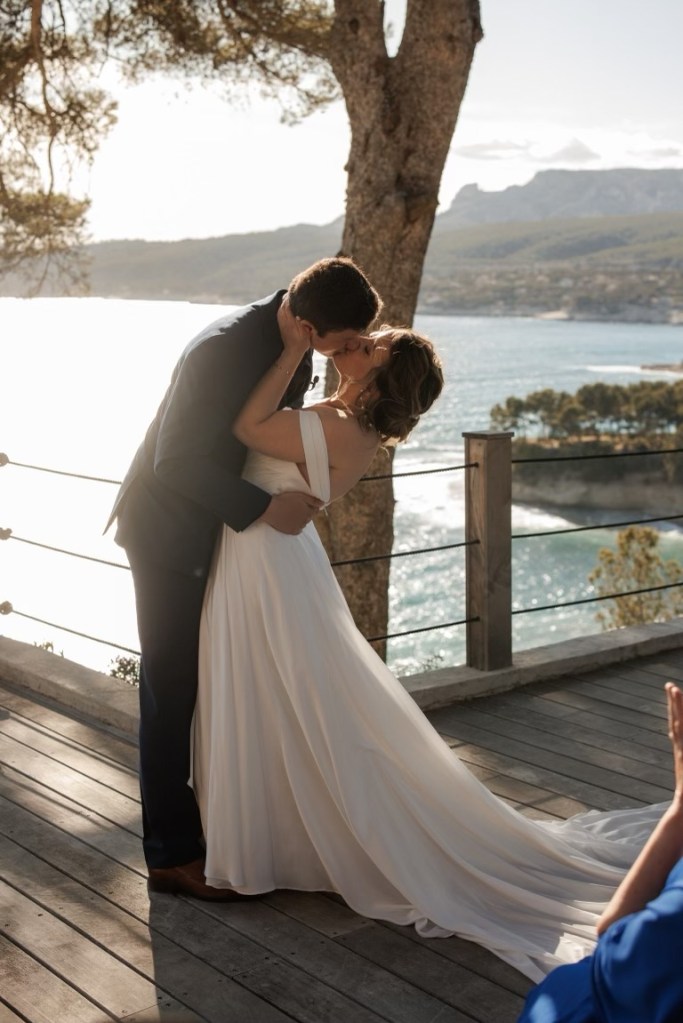
Our vacation in France expanded my horizons and opened new windows to the world, and in my old age, I learned a lot. First and foremost, I discovered the secrets and beauty of destination weddings, where everyone enjoys themselves on an equal footing. There’s no need to worry about procuring food and drinks, slaughtering animals, or roasting meat, nor the risk of offending the best man, an elder guest, or oncle Jim. I had the opportunity to spend time with my loved ones, as well as with a group of intelligent and well-mannered young people who knew how to have fun while respecting their elders. I realized that it is possible to engage in meaningful conversations without mentioning politics. It is possible to debate without quarrels and insults. A smile accompanied by a “good morning” or “good day” is not obligatory but pleasant and free. It seems to me that there is a generation that can lead us in the right direction. The youth who will replace weapons with knowledge and politicians with artificial intelligence. We have seen that ChatGPT can successfully compose tedious bureaucratic letters or job application forms, but if you ask it to create a good poem, story, or novel, it doesn’t quite excel. There are educated young people who will use technology to replace the “peasants in the front rows” of our daily lives and channel their creative energy towards important matters that give meaning to life. They have the potential, desire, knowledge, and ability to change the corrupt world around us; it is our role to help them do so.
 STORY TELLER
Leave a comment